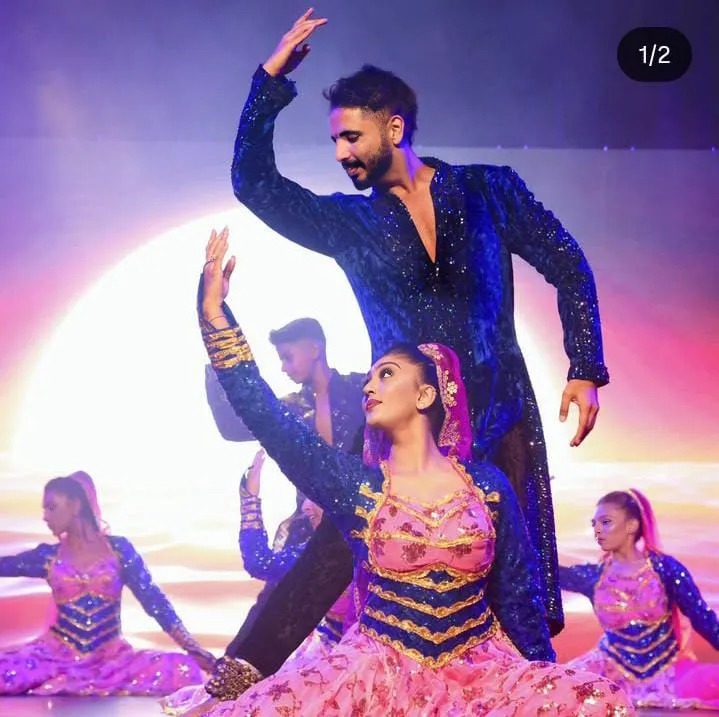
Jagseer Singh Choreographer
Jagseer Singh: The Silent Force Behind Indian Cinema's Most Memorable Dance Sequences
By: Filmbeat Bureau
In the vibrant world of Indian cinema, where songs and dance sequences are more than just entertainment—they're storytelling tools—Jagseer Singh has emerged as a dynamic choreographer whose work speaks louder than words. With a career that spans across Punjabi and South Indian films, Singh’s dance direction has enhanced not just music numbers but entire narratives.
With celebrated credits in films like Samar, Bajre Da Sitta, Honsla Rakh, Jind Meriye, Asuran, Manje Bistre, and the recent Dulla the Robinhood (2025), Jagseer Singh is not just adding steps to the screen—he’s crafting culture, emotion, and rhythm into film language.
Humble Beginnings, Powerful Growth
Jagseer Singh didn’t come from the glitzy backstages of Bollywood. His early life was rooted in Punjab, where local festivals and village stage shows became his first classrooms. Drawn to dance from a young age, Singh began choreographing school events and local performances before transitioning into the regional music video circuit. It was here that his talent began to turn heads.
“My journey wasn’t about becoming famous,” Singh once said in an interview. “It was about doing justice to the music and the story. When I choreograph, I think like a storyteller.”
This storyteller's path took a pivotal turn when he was invited to choreograph a folk dance number for a mid-budget Punjabi film. The number became a highlight, and Jagseer Singh was soon collaborating with leading filmmakers and actors.
The Art of Authenticity
Whether it's a small-town romance or a rural action drama, Singh’s choreography blends realism with rhythm. In Bajre Da Sitta, he recreated traditional Punjabi dance forms, capturing the essence of pre-Partition Punjab with minimal flair and maximum grace.
In contrast, Honsla Rakh allowed him to explore contemporary moves, infusing the soundtrack with urban energy while keeping the cultural undertones intact.
But perhaps his most nuanced work came in Asuran, where his choreography went beyond dance and seeped into crowd movement and ritual staging. Rather than stealing the spotlight, his work enriched the scenes, deepening their emotional gravity.
A Versatile Creative Vision
Unlike many choreographers who stay within one industry, Singh has seamlessly worked across languages and genres. His work in Jind Meriye and Manje Bistre proved his ability to handle big-budget, ensemble-driven dance sequences with clarity and coordination.
In Dulla the Robinhood (2025), Singh choreographed war marches and celebratory songs in a stylized, dramatic format. Here, his background in traditional Punjabi martial movements came to the forefront, lending authenticity to battle sequences that were more theatrical than realistic—but never exaggerated.
Meanwhile, in Samar, a lesser-known but critically praised film, Singh delivered a sparse, haunting choreography that served the film’s somber tone. Even the silences in his sequences held meaning.
Collaboration is Key
Directors often describe Jagseer Singh as a collaborator rather than a contractor. He’s known for sitting through script readings, absorbing character arcs and story moods before crafting any steps.
“Dance isn’t just a break between scenes,” he explains. “It’s a continuation of the story, just in a different language.”
His approach has earned him the trust of some of the industry's most discerning filmmakers, who rely on him to provide not just choreography, but movement direction, background flow, and physical continuity in ensemble scenes.
Training the Next Generation
Despite his growing fame, Singh remains deeply involved in mentoring young talent. His choreography workshops in Chandigarh and Ludhiana attract aspiring dancers from all over North India. But it’s not all spins and footwork—he emphasizes cultural context, spatial awareness, and storytelling through movement.
“Being a dancer is not enough,” he tells his students. “You have to be a narrator, a mood-setter, and sometimes, the emotional core of the scene.”
Singh is currently working on compiling his experiences into a dance philosophy manual, aimed at guiding young choreographers in balancing creativity with cinematic demands.
What’s Next?
With upcoming projects in both Punjabi and Tamil cinema, Singh is looking to experiment more with fusion styles and minimalist compositions. He’s also reportedly in discussions to choreograph for a major Hindi period drama, though he remains tight-lipped about the details.
“I don’t chase the camera,” Singh smiles. “I chase connection. If my choreography makes the audience feel something—joy, sorrow, love, or courage—then I’ve done my job.”
In a film industry where grandeur often overshadows intention, Jagseer Singh is quietly rewriting the role of choreography—one meaningful step at a time.